We are here to answer any question you may have. Feel free to reach via contact form.
Leading a Systemic Approach to Human-AI Collaboration
As AI Lab Lead, I conceptualized a generative framework to break a "Maintenance Loop" that consumed 60% of designer capacity. Using postcards as an experimental pilot, I implemented AI agents and a centralized Prompt Library to transition the team to strategic Art Direction with AI, eliminating the friction of legacy templates to reclaim room for innovation.
Validated via A/B testing, this experiment delivered a 58% reduction in production time and a 45% lift in design freshness. The resulting conceptual blueprint serves as a scalable model for balancing creative integrity with operational speed across the company's product catalog.
Categories
AI Research, Experimental AI Design
Tools
Figma, UserTesting, FullStory
HEAR THE STORY
0:00/--:--
01
The Catalyst
Identifying the Scaling Paradox
Our Postcard category was a top seller but had become stagnant, trapped between declining user satisfaction and a production process that couldn't scale.
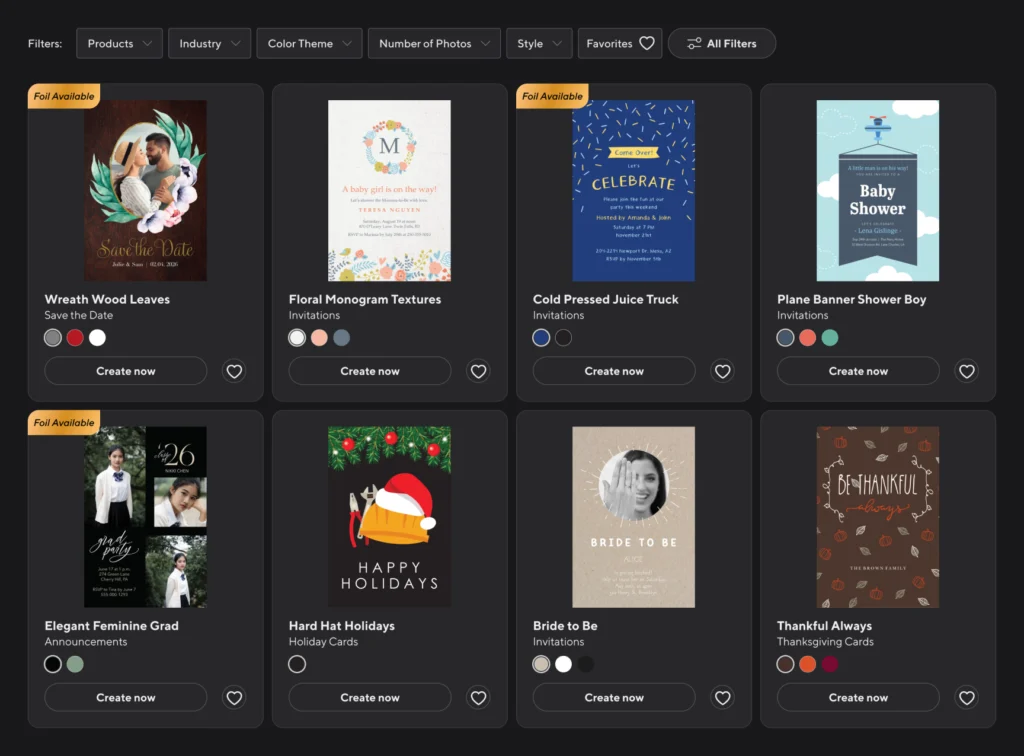
The templates page
The User Friction Clusters
Research revealed that our users were hitting a wall.
32%
of users perceived templates as "outdated" or "limited"
TREND LAG
"This invitation looks like my mom's wedding"
60%
of customers are frustrated by rigid templates
LIMITED VARIERTY
"I can't find a template for my Galentine's Day party"
18%
of customers get stuck on manual warnings.
TIME CONSUMING
"I have to delete half the stuff to make it look good"
The Maintenance Loop
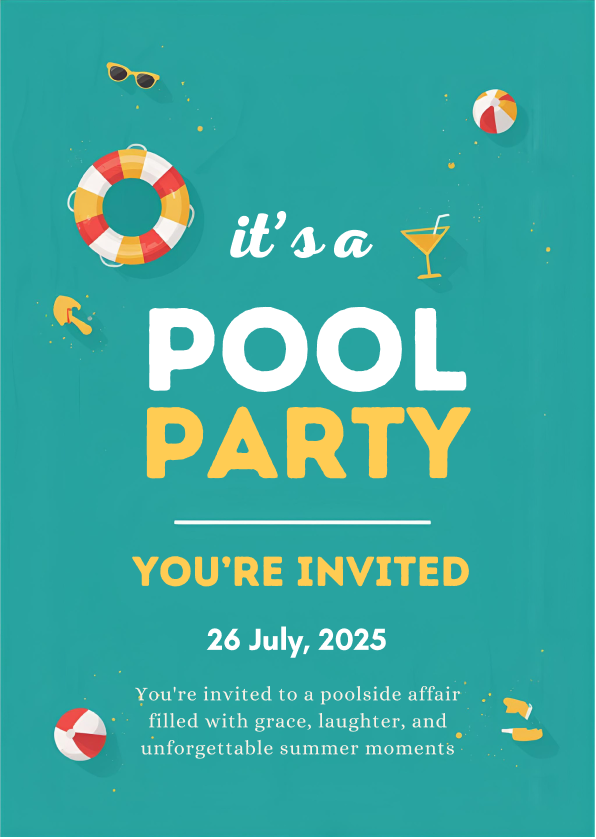
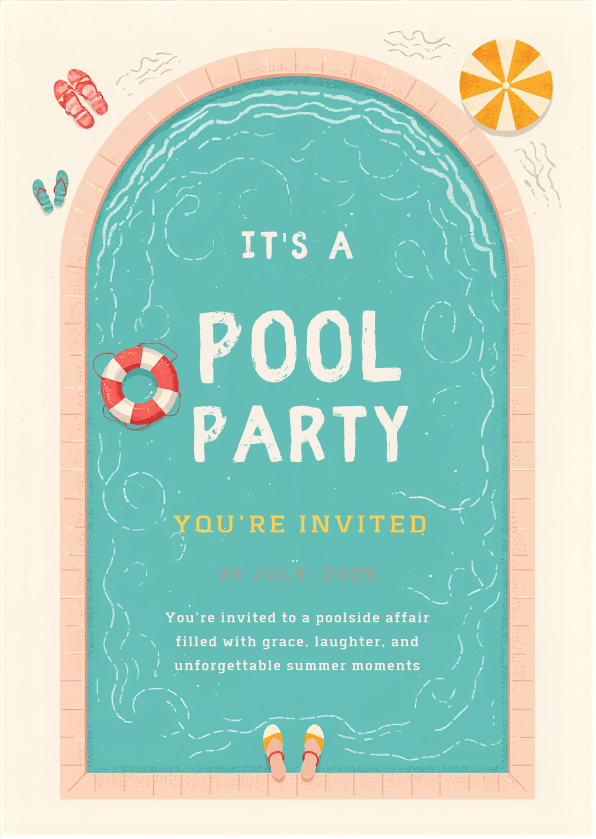
Because our system was so rigid, graphic designers spent the majority of their time manually refreshing old seasonal collections (e.g., updating dates from 2024 to 2025) rather than creating new work.
60% Technical chores (manual updates)
40% Creative
02
Design Mandate
Core objectives of the AI Lab
Based on the customer friction and maintenance loop, the experiment was built around four strategic pillars:
Eliminate technical friction
Modernize Offer Perception
Reclaim Creative Capacity
Establish a Scalable Blueprint
03
Designing for Intent
From executors to art directors
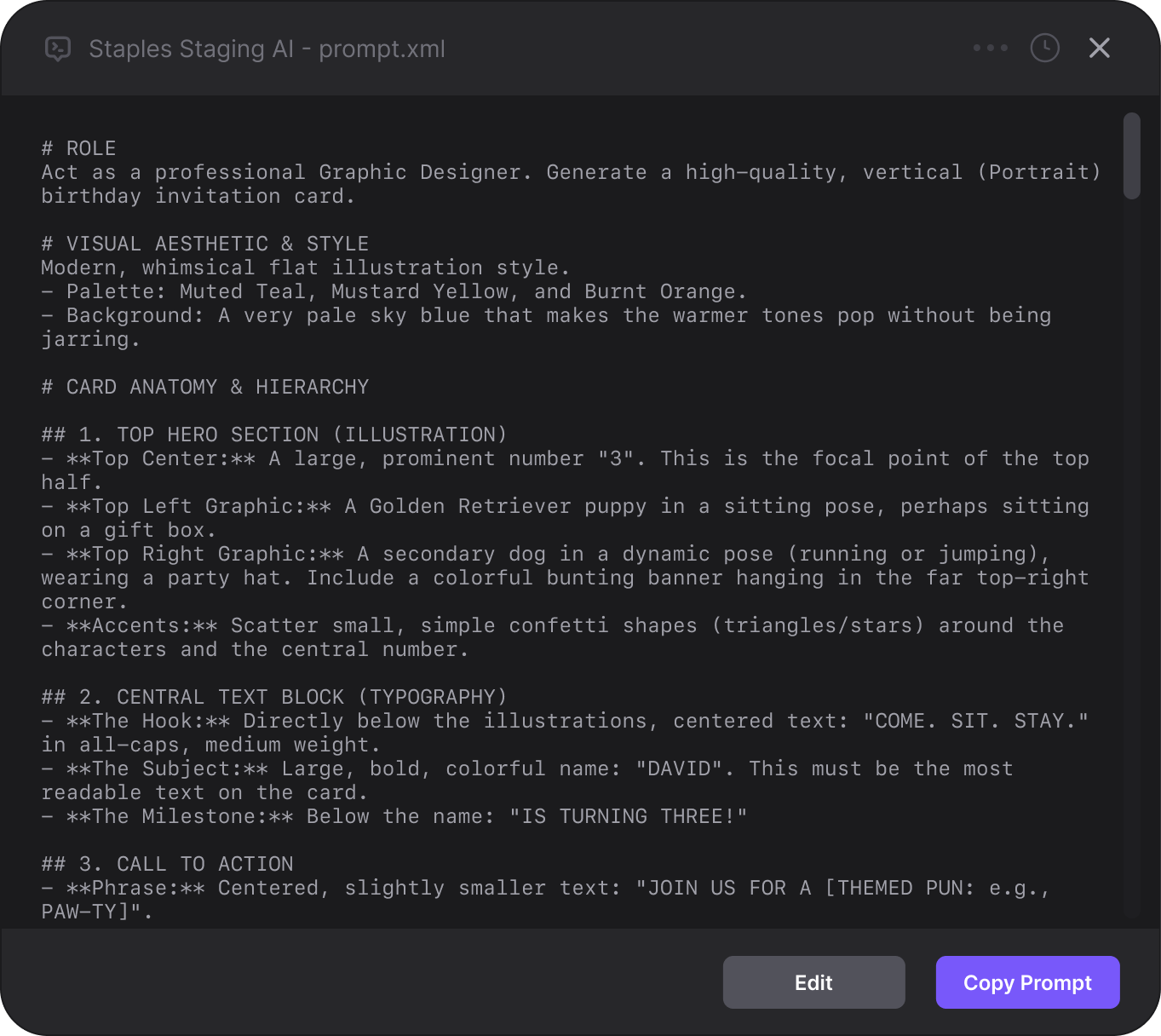
To solve the "Legacy Trap" and high internal production costs, I steered the AI Lab toward LLM (Large Language Models) experimentation to augment rather than replace our talent. Through direct collaboration with the graphic design team, we created a Centralized Prompt Library, a foundational tool that turned the designers' aesthetic expertise into a shared, generative resource, empowering them to scale their creative vision without manual repetition.
Create a wedding invitation with an 'Ethereal Garden Romance' aesthetic. The visual style should feature soft watercolor illustrations of dusty rose florals...
Create a graduation announcement with a 'Modern Deco Academic' aesthetic. The graphic style relies on clean geometric patterns, intersecting architectural lines...
Create a holiday card with a 'Rustic Nordic Winter' aesthetic. The graphic style should feature symmetrical, folk-art inspired patterns of pine trees, snowflakes...
Systemizing design DNA
By codifying the spirit of a brand or the nuance of a seasonal collection into the library, the system gained a contextual understanding of design that empowered graphic designers to generate vast template variations effortlessly.
From rigid boxes to fluid design
Instead of forcing a graphic designer to manually update templates, the system intelligently re-architected postcard layouts. Whether handling long holiday greetings or varied photo orientations, the AI-driven system maintained visual harmony automatically, preventing the technical warnings and ensuring visual harmony.
04
Quality Lens
Guarding professional standards with a scoring framework
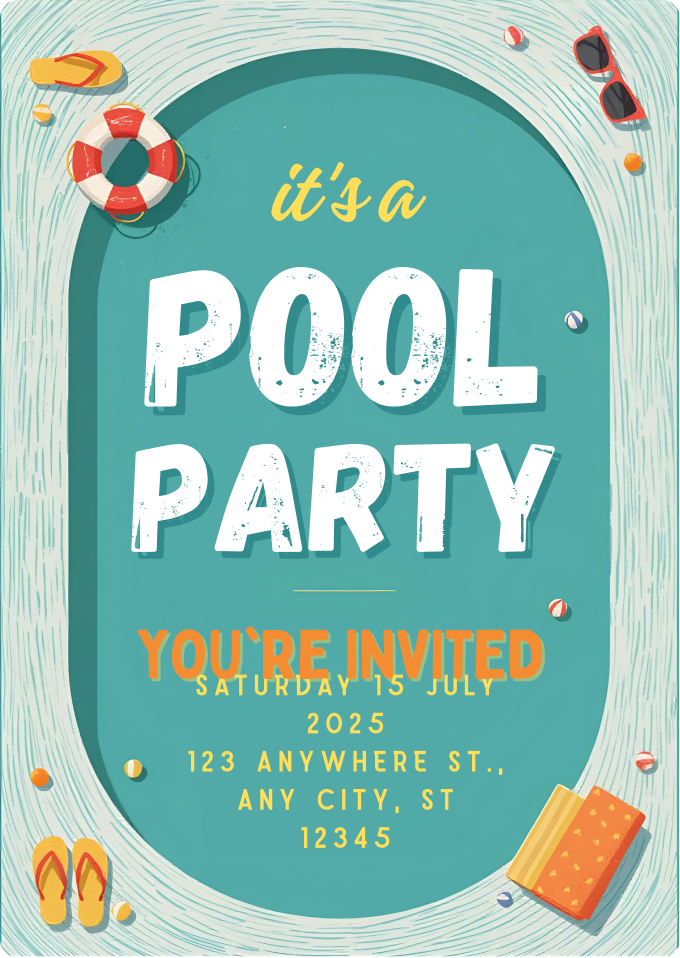
The most critical output of the Lab initiative was the Quality Control Scoring Key. Based on user experience evaluations, we created this framework using human judgement to ensure every AI-generated postcard met professional print standards by defining success across four essential pillars.
VISUAL INTEGRITY
2 / 3
Good concept but needs better spacing.
COLLECTION COHERENCE
3 / 3
Perfectly unified with the group
TECHNICAL FEASIBILITY
2 / 3
Needs minor layout adjustments
ACCESSIBILITY COMPLIANCE
1 / 3
Fails contrast or legibility
OVERALL SCORE
1.75
While the design is conceptually strong and fits perfectly within the collection, it has critical "blockers" that prevent it from being shipped or printed as-is.
Partially automating checks with AI judges
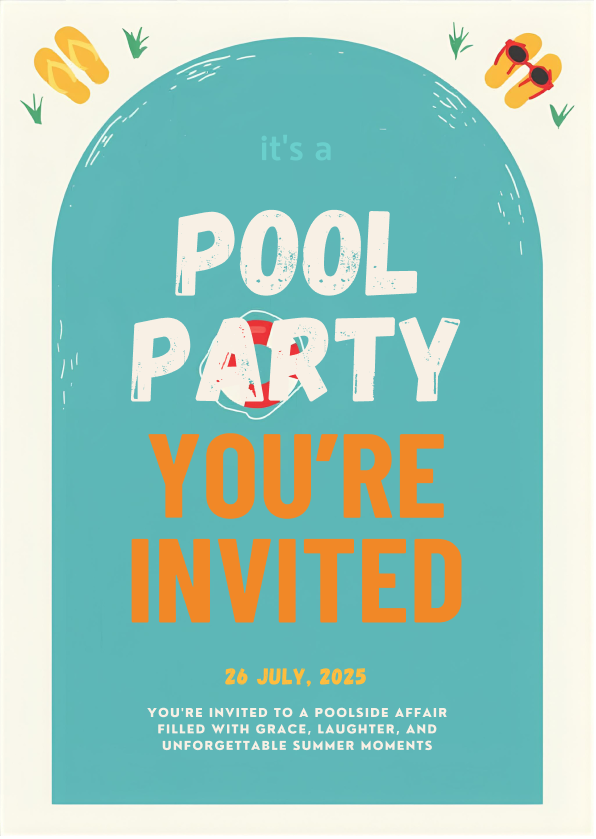
Our long-term vision was a balanced approach to ensure that we could scale production without losing the human intuition. For example, if a design contained a compromised layout, the set of AI judges would evaluate it against the scoring key, flagging it so that a graphic designer would need to verify, tune and approve the final outcome.
Accessi-Billy
Checking WCAG compliance
ACCESSIBILITY SCORE
1 / 3
Fails text legibility
ACCESSIBILITY SCORE
3 / 3
Fully AA/AAA compliant
ACCESSIBILITY SCORE
2 / 3
Text contrast needs improvement
05
AI Agents
Designing a fleet of specialized roles for partial automation
To move from a conceptual framework to an operational reality, I conceptualized the logic for an initial AI Agent Infrastructure that could act as a "digital workforce" that would handle the heavy technical lifting that previously burdened the graphic design process.
06
Vibe-Coded validation
Using "Vibe Coding" as a new prototyping tool.
To validate the effectiveness of the AI Lab experiment. I used "Vibe Coding, a prompt-based functional prototyping method, to recreate the "Template Selection Page" featuring 50 AI-generated postcard templates. Then I ran a head-to-head A/B test to compare customer perception of these new designs against our legacy inventory.
I chose this approach not only for its speed but as a strategic learning opportunity to begin experimenting and familiarizing with this new class of design tools, bridging the gap between static mocks and functional code.
A/B testing the AI generated designs with customers
In collaboration with the design team, we established strict thresholds for success, focusing on aesthetic quality, user sentiment, and flexibility. The results proved that our generative approach didn't just speed up production—it fundamentally modernized the product's appeal.
07
Outcomes
Success Metrics
45%
Higher "freshness" score
The new experimental experience outperformed the legacy flow, boosting customer satisfaction.
20%
Production Efficiency
Optimized the internal delivery window, allowing for greater collection variety without increasing operational costs.
Future Considerations
Learning Curve Gap
While workflows were faster, we identified a significant disparity in AI literacy that requires ongoing, dedicated mentorship and formal technical training sessions.
Aesthetic Artifacts
AI generated compositions occasionally produce "uncanny" or weird layouts that require manual oversight to ensure the "human touch" isn't lost.
07
The takeaway
Scaling Human Resonance
This journey proves that leadership in the AI era isn't about choosing between speed and soul; it’s about architecting systems where the machine handles the friction so the human can provide the resonance. Ultimately, this case study serves as a roadmap for scaling vision rather than just volume, ensuring that when we innovate, we do so with both professional integrity and a renewed creative focus.
More Projects
Bridging the gap between digital and printed results